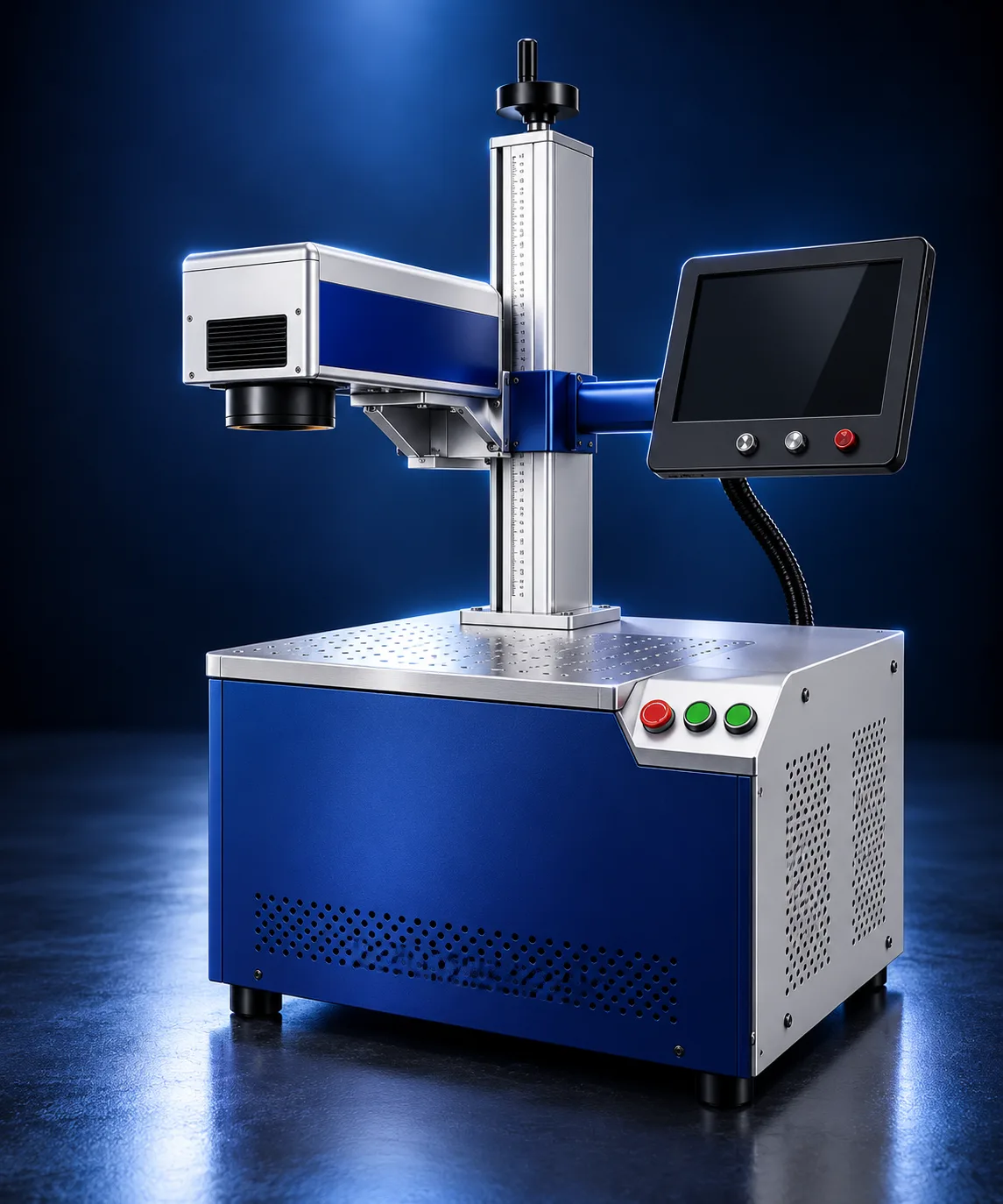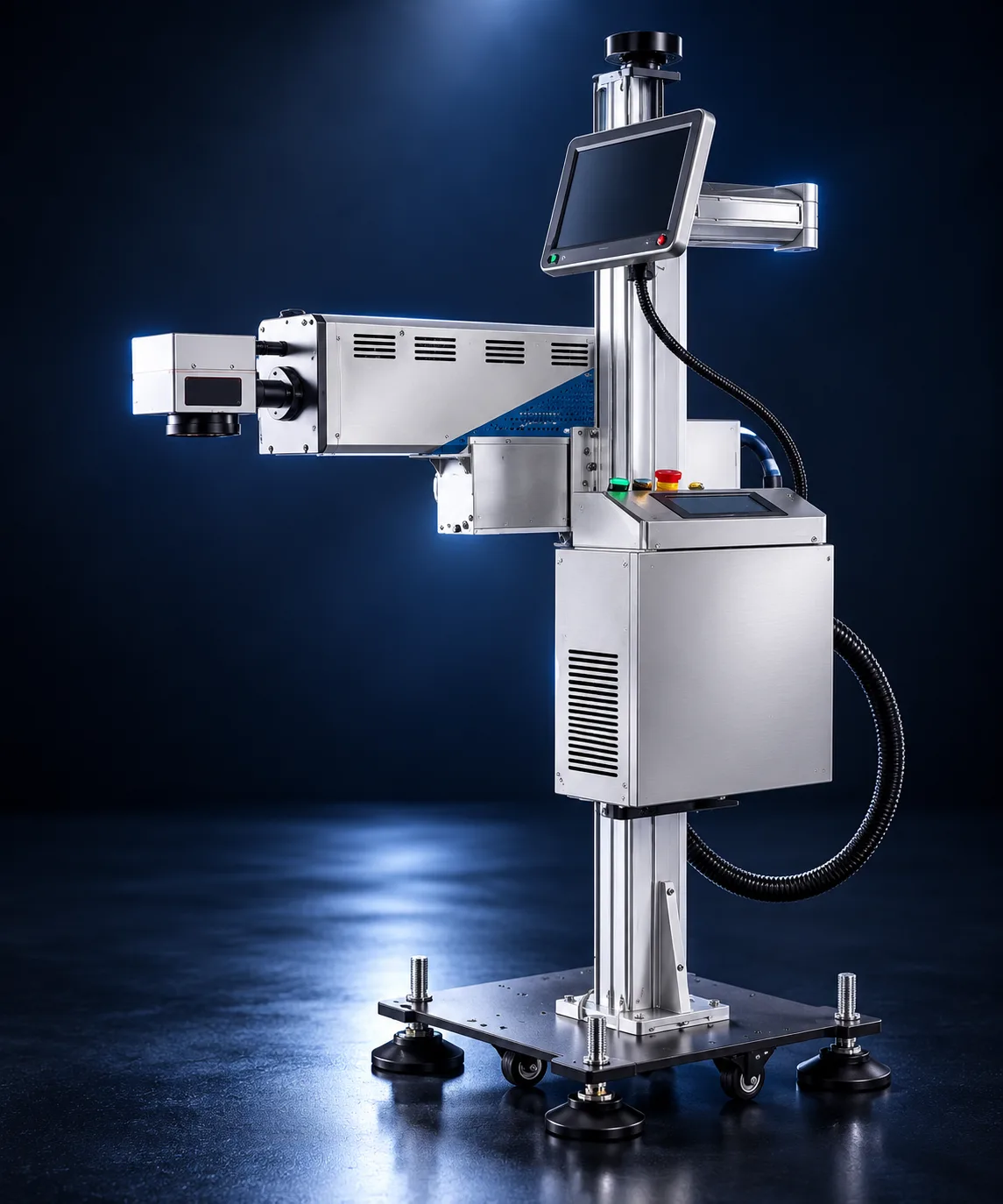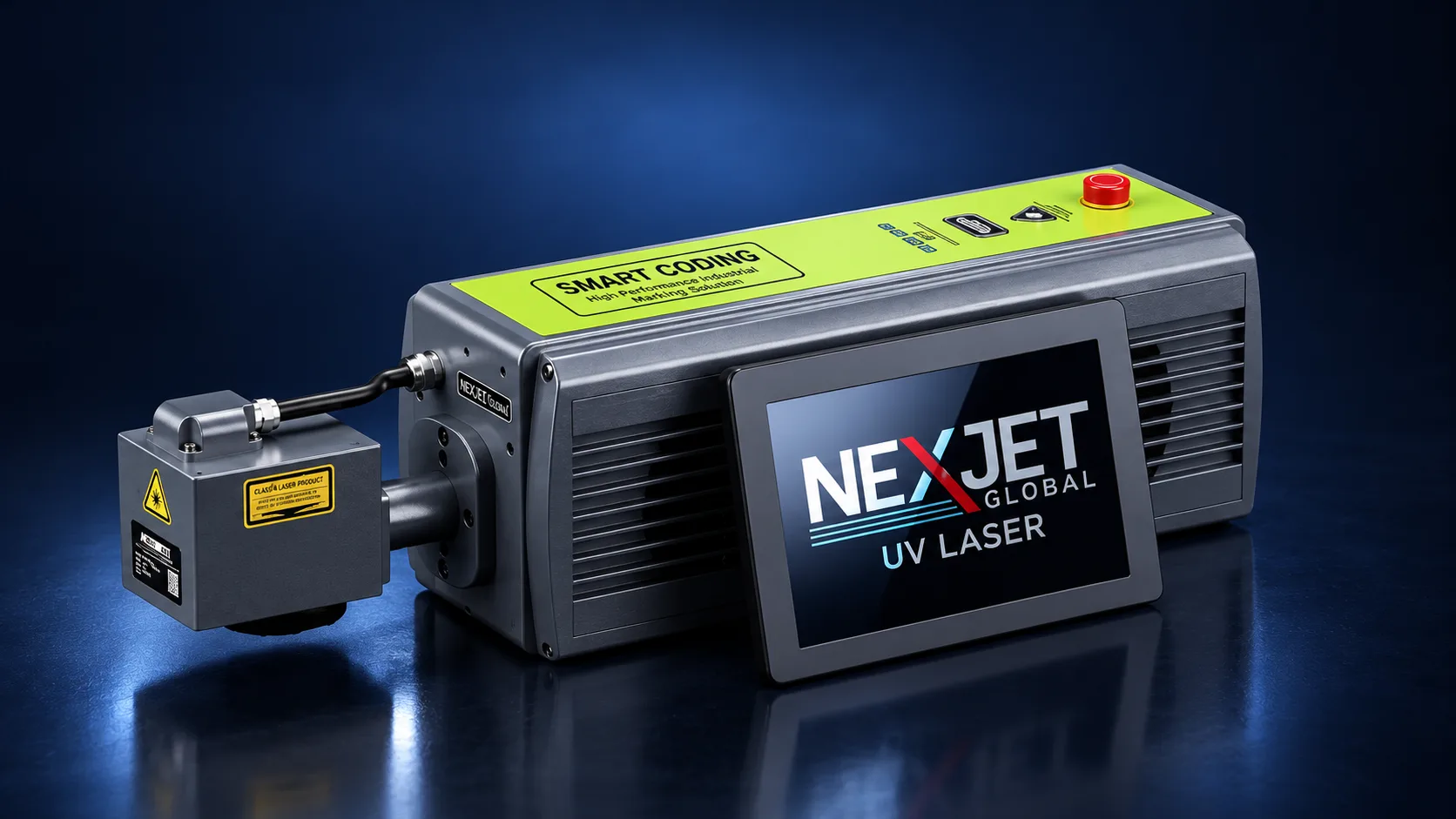

How does laser marking work?
A laser source produces a focused beam, and fast-moving mirrors in a scan head steer it across the product to draw the code. The beam changes the surface: it removes a coating or ink layer, changes the material's colour, foams it or engraves it. No ink or ribbon is used, and the mark is permanent.
Each material absorbs some wavelengths far better than others. That is why choosing a laser starts with the material.
Which laser suits which material?
CO2 laser (around 10,600 nm)
The CO2 wavelength is absorbed well by non-metal materials. Typical uses are cartons and labels (removing a printed or coated layer to reveal a contrasting mark), paper, glass, PET bottles, wood and many plastics. It is not normally used on bare metal.
Fiber laser (around 1,064 nm)
Fiber lasers are absorbed well by metals and many hard plastics. Typical uses are permanent codes and serial numbers on steel, aluminium and other metal parts, and marks on many engineering plastics, sometimes with laser-sensitive additives. The beam passes through most transparent materials, so fiber is not the choice for clear glass or clear film.
UV laser (355 nm)
UV light is absorbed by a very wide range of materials and marks with very little heat, often called cold marking. Typical uses are fine, high-contrast marks on sensitive plastics such as HDPE and PP, films, pharmaceutical and cosmetic packaging, glass and electronics. UV systems cost more to buy, and many UV sources need a water chiller.
These are general rules. Results depend on the exact material, colour, additives and coating, so confirm every application with sample marking.
Static or flying laser?
Static marking holds the product still while the laser marks it, which suits parts, workstations and indexed lines. Flying (on-the-fly) marking codes products while they move: an encoder tracks line speed and the scan head compensates for the movement. Flying lasers suit continuous lines of bottles, cans and cartons.
Achievable line speed depends on code content, material and laser power, so ask for the speed at your actual code and material.
What does a laser installation need?
- Fume extraction: marking releases fumes and particles that must be extracted and filtered. Filters are the main consumable.
- Cooling: lower-power fiber sources are usually air-cooled, while many UV and some CO2 sources need a water chiller, such as an industrial UV laser chiller. Check the requirement for each model.
- Laser safety: most marking laser sources are Class 4. Guarding, enclosures, interlocks and trained staff are needed so that nobody is exposed to the beam. Follow the system's safety classification and local regulations.
- Lens and marking field: the lens sets the size of the marking area and the working distance. Choose it for your code size and product.
- Environment: heat and dust affect laser sources and optics. Check the verified operating range and keep the optics clean.
What does laser marking cost to run?
With no ink or ribbon, running cost per code is low: mainly electricity, extraction filters and occasional service. The purchase price is higher than inkjet, so compare total cost over the equipment's life, including extraction, guarding and any chiller.
The NEXJET laser range
- UV laser printer: precision marking.
- UV flying laser: marking on moving production lines.
- Fiber laser: metal and selected plastic marking.
- CO2 laser: cartons and compatible materials.
When is laser the right choice?
Choose laser when you need permanent, high-quality marks with no ink, on a material that marks well at the chosen wavelength, and your volume justifies the investment. Consider a CIJ printer when materials vary widely or a laser cannot give enough contrast. For a full comparison, read choosing a coding technology by material.
الأسئلة الشائعة
Is a laser mark permanent?
Yes. The laser changes the material or removes a surface layer, so the mark cannot be wiped off like ink.
Can a laser mark black plastic?
Often, yes. Fiber and UV lasers can produce a lighter mark on many dark plastics, but contrast depends on the material and its additives, so test samples first.
Do laser coders need a chiller?
It depends on the laser source. Many UV lasers need a water chiller, while lower-power fiber lasers are usually air-cooled. Check the specification of the exact model.
Is laser marking safe for operators?
Yes, when the system is properly guarded and interlocked, fumes are extracted, and staff are trained. Never operate an open laser without the required safety measures.
Can a laser code products on a moving line?
Yes. A flying laser uses an encoder to follow the line and marks each product as it passes, without stopping the conveyor.
إرشادات تحريرية مستندة إلى كتالوج شركة NEXJET. وهي ليست نشرة بيانات لطراز محدد.