
Milk, laban, yoghurt and juice have short shelf lives, so the expiry date is the information consumers and retailers check most. Dairy and juice lines also make coding harder than most: products are chilled, packs are often wet with condensation, and lines are washed down frequently. This guide explains how to code these packs reliably.
Common dairy and juice packs
- HDPE and PET bottles for milk, laban and juice.
- Cups and tubs for yoghurt and desserts, usually polystyrene or polypropylene with a foil or film lid.
- Gable-top and brick cartons for milk and juice.
- Caps and closures.
- Shrink packs, crates and cartons for distribution.
Each of these has a different surface, and some lines run several pack types.
The challenge: cold and wet surfaces
When a cold product meets warm air, water condenses on the pack. A layer of moisture stops many inks from adhering, and the code can smear or rub off. Wash-down water and humidity add to the problem.
Ways to deal with it:
- Choose an ink formulated for condensation. Continuous inkjet ink ranges include inks designed to penetrate moisture on cold surfaces.
- Code before filling or chilling. Empty bottles, cups or lids can be coded before they are filled or before they reach the cold store.
- Dry the coding area. An air knife just before the printhead removes water from bottles and caps.
- Choose the position. Lids, caps and the top of cartons are often drier than the side of a bottle.
Matching technology to the pack
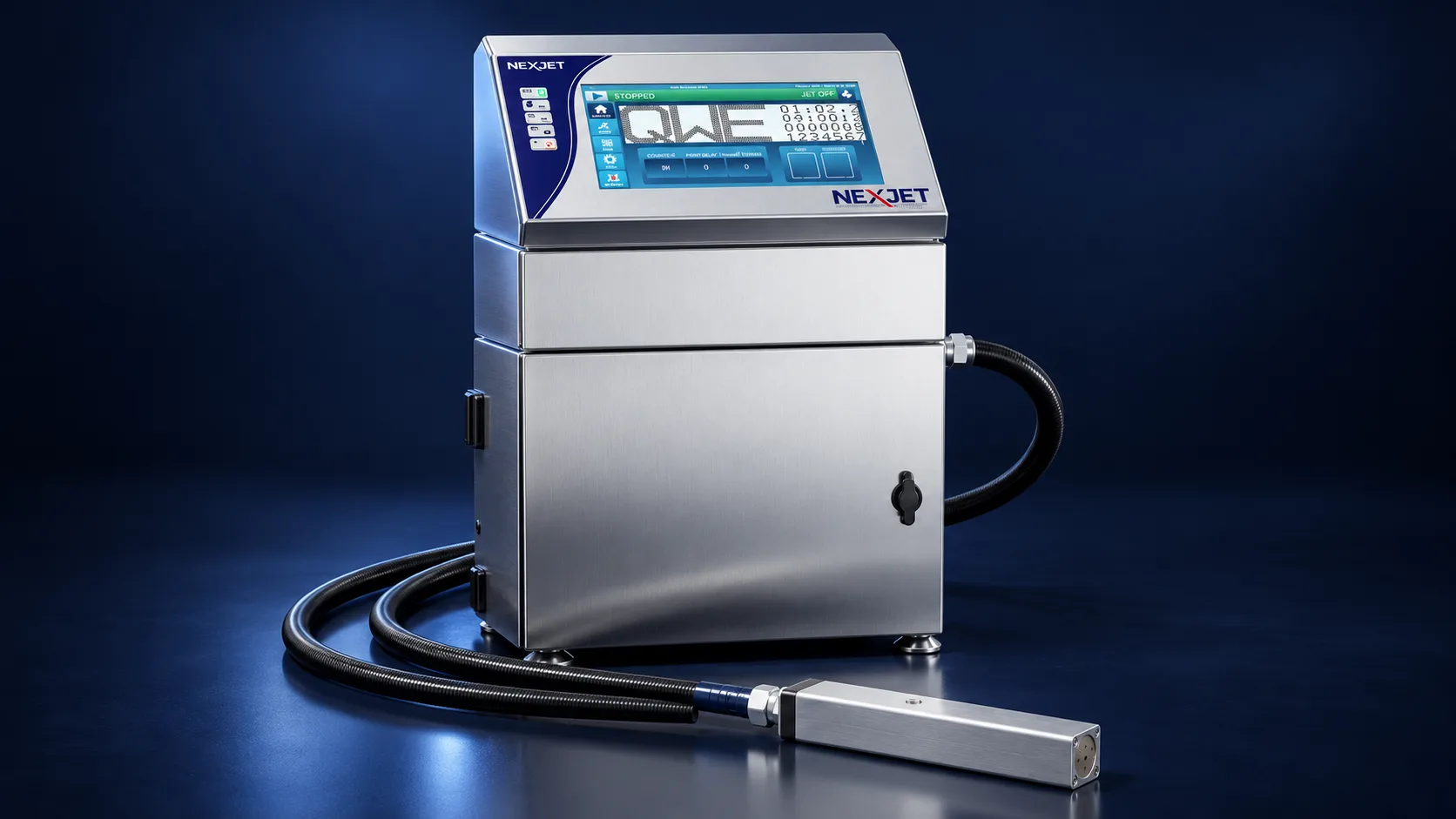
Bottles and caps: continuous inkjet
Continuous inkjet (CIJ) is the most common coder on dairy and juice bottle lines. It prints without contact on curved surfaces, at high speed and from a distance, and suitable inks cope with condensation. Read the CIJ guide for details.
Cups and lids
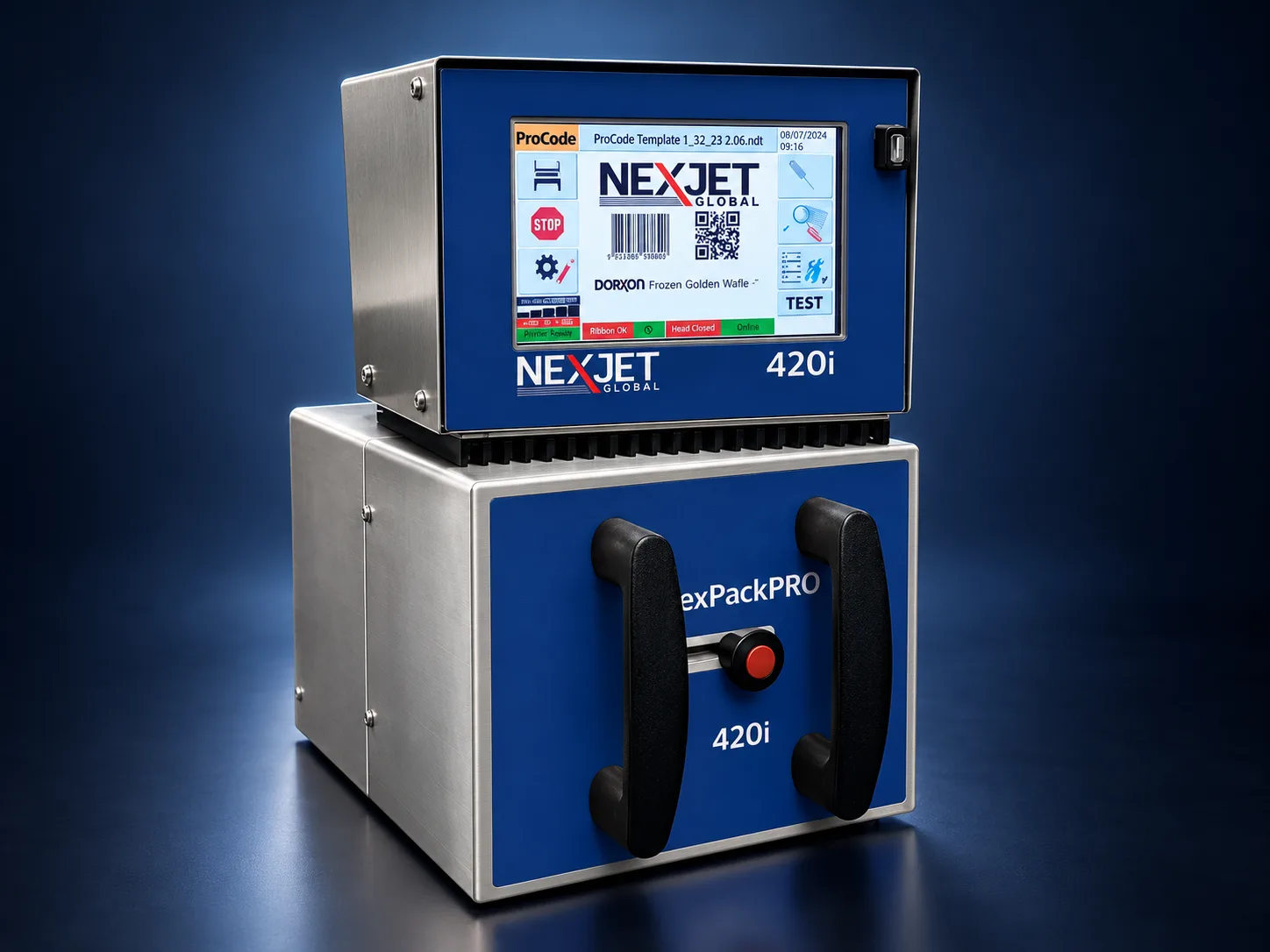
Foil and film lids are often coded with CIJ, or with a thermal transfer overprinter on the lidding film before sealing. Cup sides are curved, which favours CIJ.
Cartons and outer packs: thermal inkjet
Paper-based cartons and shipper cases print well with inline thermal inkjet, which gives sharp dates and barcodes with little maintenance, provided the surface is dry. Our CIJ vs TIJ comparison explains the trade-off.
Hygiene and wash-down
Dairy lines are cleaned often. Protect coders from direct water spray, check the printer's protection rating for your environment, and route cables and ink lines away from wash-down areas. Keep printheads clean, because milk and juice residue on a printhead affects print quality.
Short shelf life means frequent code changes
Dairy codes change every day, sometimes several times a day. Mistakes in the date are costly: product may need to be held or recalled. Good practice:
- Use automatic dates. Set the printer to calculate the expiry date from the production date and shelf life, instead of typing it each day.
- Lock messages. Restrict editing so only authorised staff can change the shelf life or format.
- Check the first pack. Verify the code at every start-up and product change.
- Keep a log. Record message changes and checks for traceability.
Frequently asked questions
Which printer is best for coding milk bottles?
Continuous inkjet (CIJ) is the most common choice for milk and juice bottles because it prints without contact on curved, cold surfaces at high speed with inks designed for condensation.
How do I stop expiry dates smudging on cold dairy packs?
Use an ink formulated for condensation, dry the coding area with an air knife, or code the pack before it is filled or chilled.
Can thermal inkjet print on milk cartons?
Yes, thermal inkjet prints sharp codes on paper-based cartons, as long as the surface is dry at the coding point.
How should expiry dates be set on a dairy line?
Set the printer to calculate the expiry date automatically from the production date and the approved shelf life, and restrict who can change it.
Can yoghurt lids be coded?
Yes. Lids are coded with continuous inkjet after sealing, or with a thermal transfer overprinter on the lidding film before sealing.
Editorial guidance informed by the NEXJET company catalogue. This is not a model-specific datasheet.