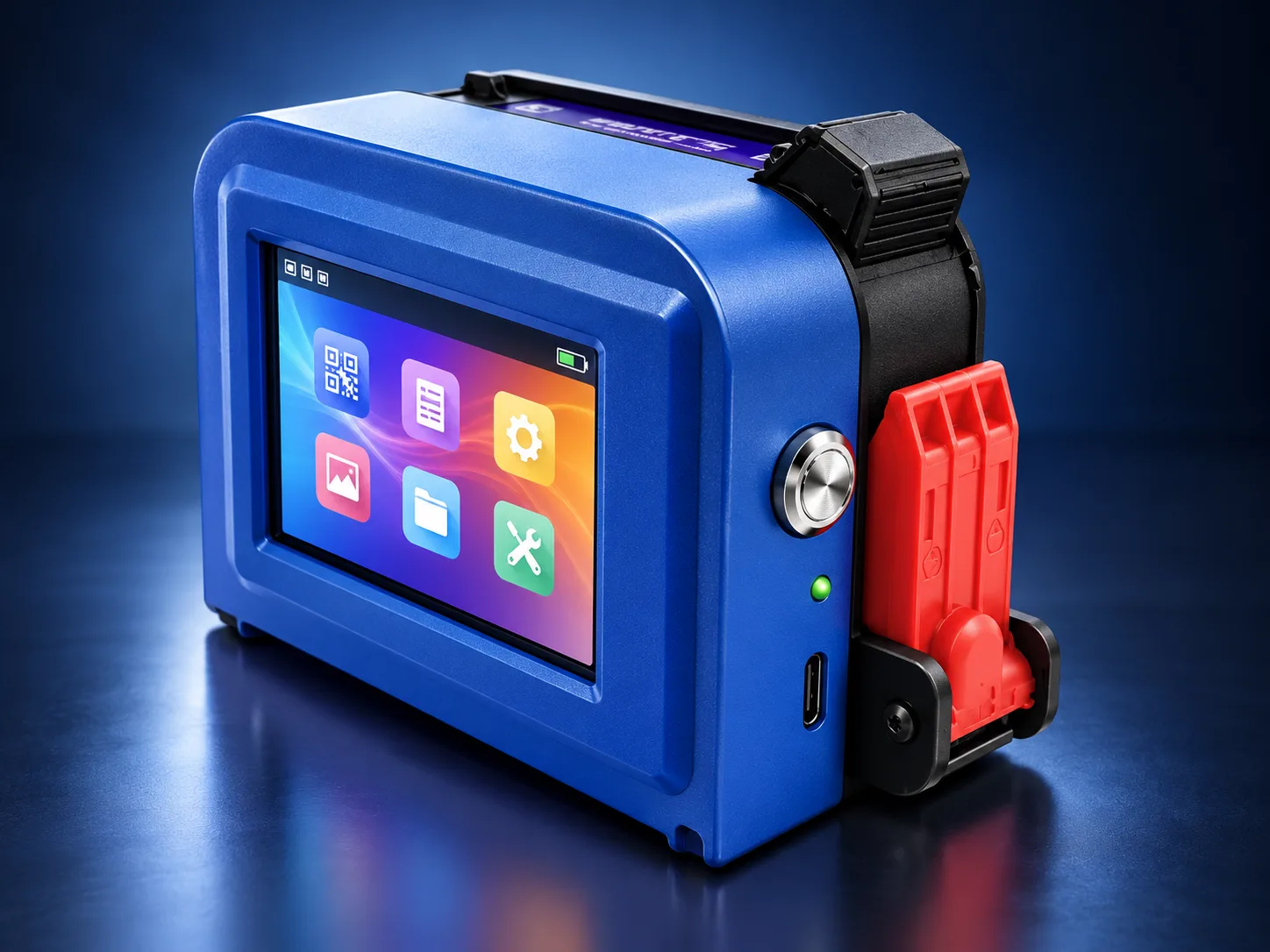

How does a thermal transfer overprinter work?
A row of tiny heating elements on the printhead presses an ink-coated ribbon against the film. Wherever an element heats, ink melts off the ribbon and bonds to the film, building the code dot by dot. The film needs a firm backing, such as a platen, roller or print pad, under the print area.
The code is printed dry and at high resolution, so TTO produces crisp text, logos and barcodes close to label-printer quality, with no drying time.
Intermittent or continuous mode?
TTO works in two modes, matched to how your packaging machine moves the film:
- Intermittent: the film stops each cycle and the printhead travels across it to print. Common on form-fill-seal machines with indexed film and on thermoformers.
- Continuous: the film keeps moving; the printhead stays still and the ribbon travels with the film while printing. Common on flow wrappers and continuous-motion lines.
Many TTO printers support both modes. Confirm which modes, print area and speed apply to the specific model.
What can TTO print on?
TTO is designed for smooth, flexible materials:
- Flexible films and laminates for pouches, sachets, bags and flow wraps
- Lidding film on trays and cups
- Labels and tags on labelling machines
It does not suit rigid, curved or porous surfaces such as bottles, cans or corrugated cases. CIJ, thermal inkjet or laser cover those.
How do you choose the ribbon?
Match the ribbon to the film and to what the code must withstand:
- Wax-resin ribbons: a general-purpose balance of print quality and durability on many films.
- Resin ribbons: higher resistance to scratching, heat and chemicals for demanding packs.
- Special ribbons: coloured ribbons, or ribbons for packs that are frozen, heat-treated or heavily handled.
Ribbon width, length and core size must match the printer. Always test the ribbon and film together before production.
What does TTO cost to run?
The main running costs are ribbon and the printhead, which wears over time:
- Ribbon saving: features such as minimal gaps between prints and printing several lanes side by side reduce ribbon waste.
- Printhead life: depends on print pressure, cleanliness, ribbon quality and the film.
- Compressed air: some models use plant air for print pressure, while others are fully electric. Check the requirement before installation.
Work out cost per printed pack from the ribbon used per print plus a share of printhead and maintenance cost, using your own print length and pack count.
How is TTO fitted to a packaging machine?
TTO mounts directly on the packaging machine, so plan the mounting bracket and print position, the print signal from the machine, the film speed or stroke for the chosen mode, and enough space for quick ribbon changes. Agree the installation with your machine supplier.
When is TTO the right choice?
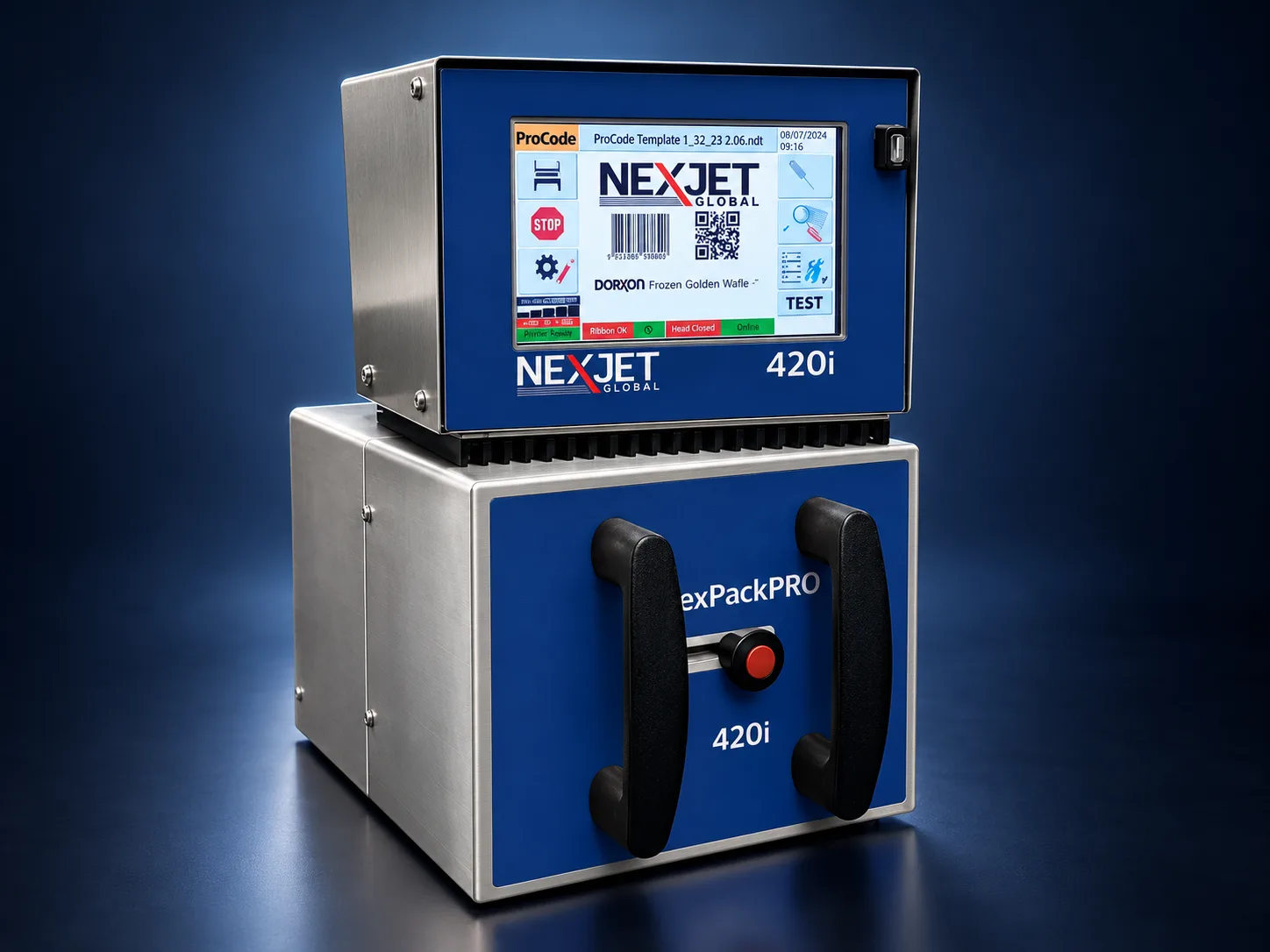
Choose TTO when you code flexible film on a packaging machine and need high-quality codes with no drying time. The NEXJET TTO 420i is built for film and pouch coding.
Consider an inline thermal inkjet printer for cartons and some films, and a CIJ printer for rigid containers.
Comparing all options? Read choosing a coding technology by material.
Frequently asked questions
Does a TTO printer need compressed air?
Some models do and some are fully electric. Check the air supply requirement for the specific model before installation.
Can TTO print barcodes and QR codes?
Yes. TTO prints high-resolution barcodes and 2D codes on smooth film. Verify the printed grade with a barcode verifier.
How many prints does one ribbon give?
It depends on ribbon length, print length and the gap between prints. Ask for prints per ribbon at your own print size.
Can TTO print on cartons or paper bags?
Not usually. TTO needs a smooth, flexible material with a firm backing. Thermal inkjet is normally the better fit for cartons and paper.
Editorial guidance informed by the NEXJET company catalogue. This is not a model-specific datasheet.