
Bottled water and soft drinks are among the highest-volume products packed in Saudi Arabia, and every bottle needs a legible production or expiry date and a batch code. Beverage lines run fast, bottles are round, and they are often wet or cold at the coding point. These conditions narrow the choice of coding technology.
Where to code a bottle
Most beverage producers choose one of these positions:
- Bottle neck or shoulder. A clear, smooth area just below the cap. Common for water bottles.
- Cap or closure. Small but easy to find, and away from the label.
- Label. Printing on the paper or film label gives good contrast, but the label must be applied before the coder.
- Shrink-wrapped multipack or carton. Outer packs carry a code for distribution, often in larger characters.
The position affects the technology: curved plastic, caps and wet surfaces favour continuous inkjet or laser, while labels and cartons can also use thermal inkjet.
Continuous inkjet on PET bottles
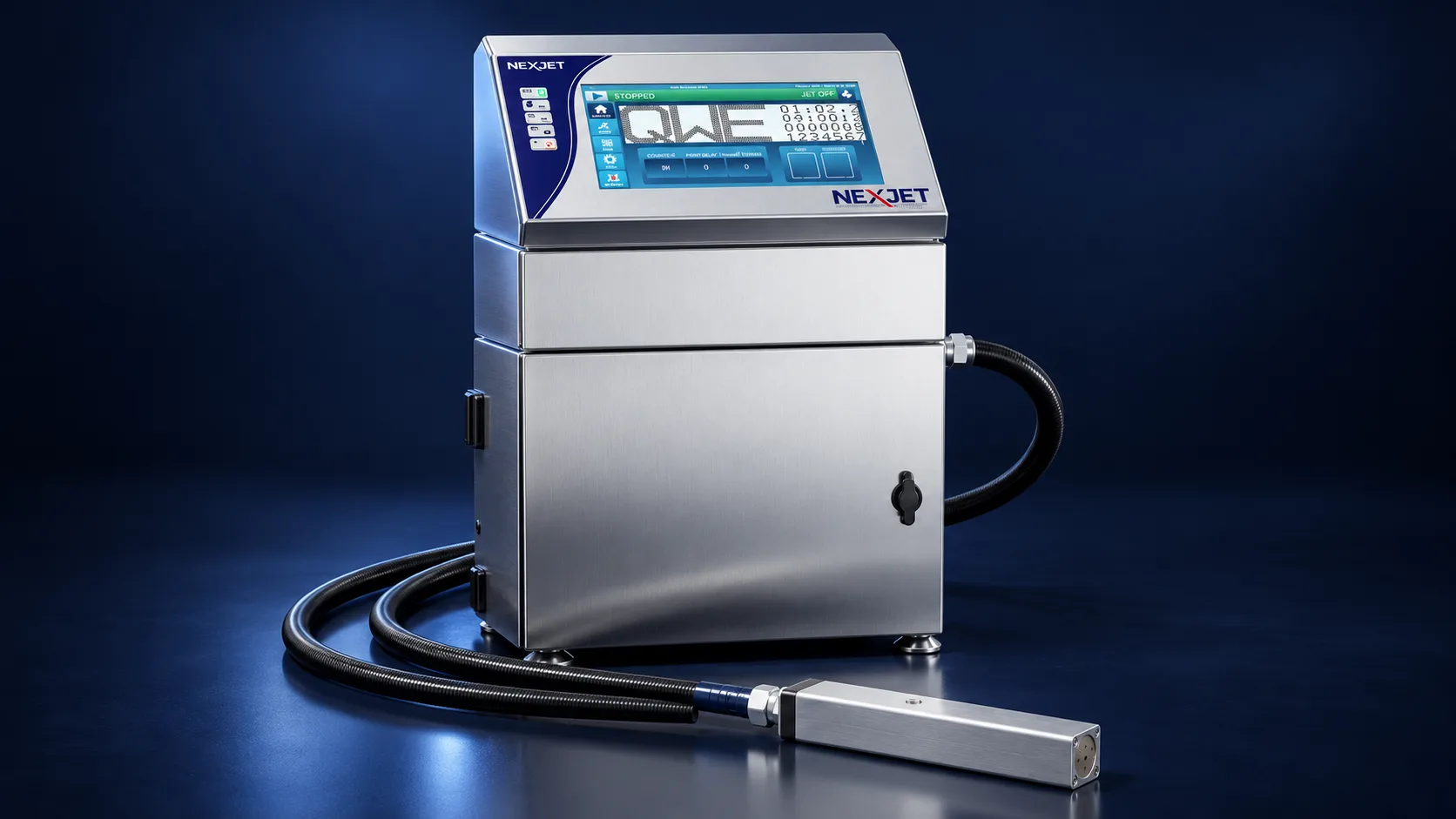
Continuous inkjet (CIJ) is the most common coder on beverage lines. It prints without contact on curved surfaces, works at high line speeds and can print from a distance, so small variations in bottle position do not matter. Fast-drying inks adhere to PET, glass, caps and cans.
Two points matter on beverage lines:
- Condensation. Bottles filled with chilled product sweat, and ink does not adhere well to a wet film of water. Choose an ink formulated for condensation, place the coder where bottles are driest, or use an air knife to clear water before printing.
- Contrast. Black ink suits clear and light bottles; for dark or coloured packaging, ask about pigmented or coloured inks.
Read our CIJ guide for how CIJ works.
Laser coding on PET and caps
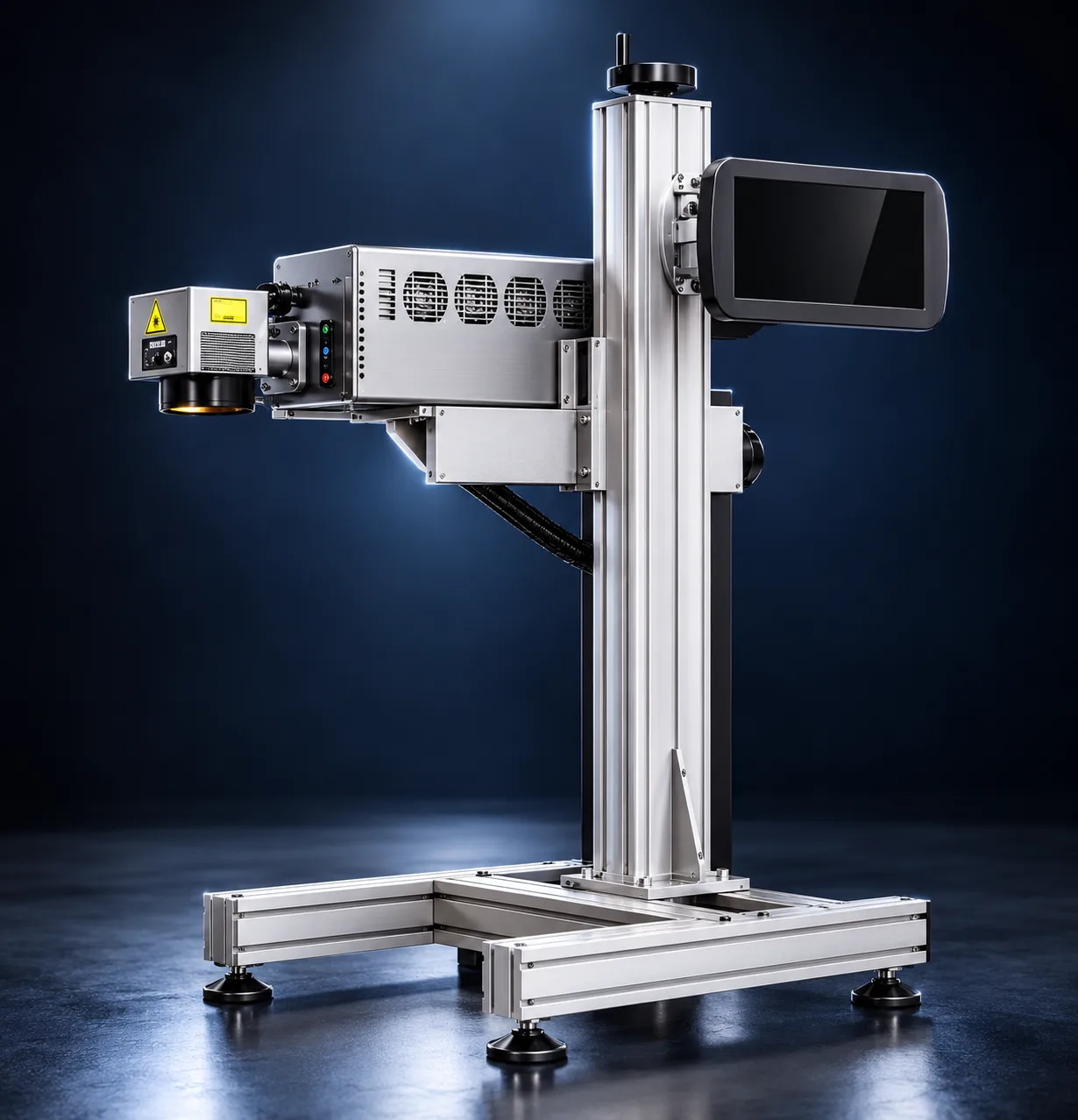
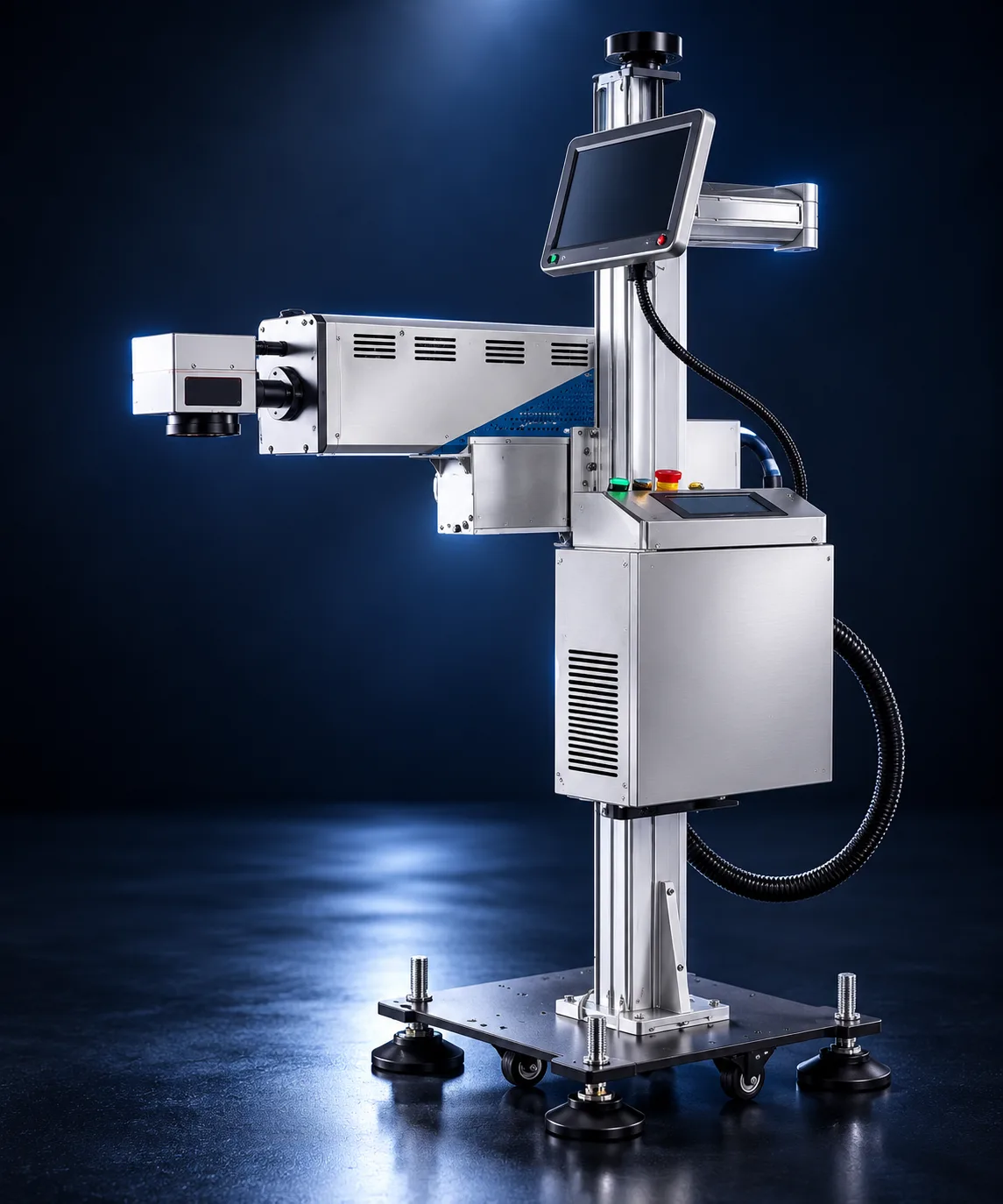
Laser coding marks the surface instead of adding ink. A UV flying laser marks many plastics with very little heat and codes moving bottles without stopping the line. A CO₂ laser is widely used on PET, glass and labels. Because there is no ink, there is nothing to smudge, and condensation affects the mark less.
Laser needs a larger initial investment, plus guarding, fume extraction and sometimes cooling, but it removes ink and solvent from the running cost. The right laser depends on the bottle material, colour and required contrast, so a sample test is essential. Our laser marking guide compares fiber, CO₂ and UV.
CIJ or laser for a beverage line?
- Choose CIJ for a flexible, lower-cost start, mixed packaging (bottles, caps, cans) and lines where different products run on the same coder.
- Consider laser for a high-volume, stable line where you want permanent codes, no ink logistics and a clean process.
Our article on choosing a coding technology explains the method, and our CIJ vs TIJ comparison covers when thermal inkjet suits labels and cartons.
Practical tips for beverage lines
- Agree the code format with your quality team before installation, including date format and batch structure.
- Mount the printhead or laser head where bottles are stable, ideally after the capper and before the labeller or shrink tunnel.
- Use a product sensor and shaft encoder so the code stays the same size when line speed changes.
- Protect the coder from water spray during wash-downs.
- Ventilate the coding area, especially in hot halls in summer.
- Check codes regularly during the shift, and keep a log of message changes.
When you request a quotation, include the bottle material and size, line speed in bottles per minute, coding position and whether bottles are wet at that point.
الأسئلة الشائعة
What printer is used to print expiry dates on water bottles?
Continuous inkjet (CIJ) printers are the most common, because they print without contact on curved bottles at high speed. Laser coders are also used on PET bottles and caps.
Why does the expiry date smudge on cold bottles?
Chilled bottles collect condensation, and ink does not adhere well to a wet surface. Use an ink designed for condensation, dry the bottle with an air knife, or code where the bottle is driest.
Can a laser mark PET bottles?
Yes. CO₂ and UV lasers can mark PET, but the contrast depends on the material and colour. A sample test confirms the result.
Where is the best place to print the date on a bottle?
Common positions are the neck or shoulder, the cap, or the label. Choose a smooth, dry, consistent area that the coder can reach reliably at line speed.
Is laser coding cheaper than inkjet for bottles?
Laser has a higher initial cost but no ink or solvent to buy. On high-volume, stable lines the running cost can be lower; compare both using your own production figures.
إرشادات تحريرية مستندة إلى كتالوج شركة NEXJET. وهي ليست نشرة بيانات لطراز محدد.